Whoa! Okay, so check this out—I’ve been using browser extension wallets for years, and there are few things that feel equal parts liberating and nerve-wracking. My instinct said «freedom,» but then a dozen tiny risks showed up like gnats at a summer picnic. Seriously? Yes. At first I assumed an extension that looks slick equals safe; actually, wait—let me rephrase that: polished UI doesn’t guarantee solid security. On one hand you get fast dApp access and seamless swaps; on the other hand, permissions and approvals can quietly drain a careless account.
Here’s the thing. DeFi is unbelievably convenient when your wallet sits in your browser, right where you need it. Hmm… that convenience is also the biggest attack surface though. Initially I thought browser-based keys were «fine if you’re careful,» but then I realized the attack vectors are subtle and social—phishing overlays, malicious RPCs, and approval fatigue are the usual suspects. I’m biased, but I prefer wallets that force me to think twice about every signature. That little pause has saved me more than once.
Let’s be practical. Browser extension wallets reduce friction: instant token approvals, in-page dApp connections, and quick chain switches. They also ask for a lot of trust: to read page data, to request transactions, to store keys locally. Something felt off about blindly clicking «Approve» on a contract with one million allowances. I learned the hard way to audit allowances regularly and to use tools and patterns that limit permissions to what the dApp actually needs.
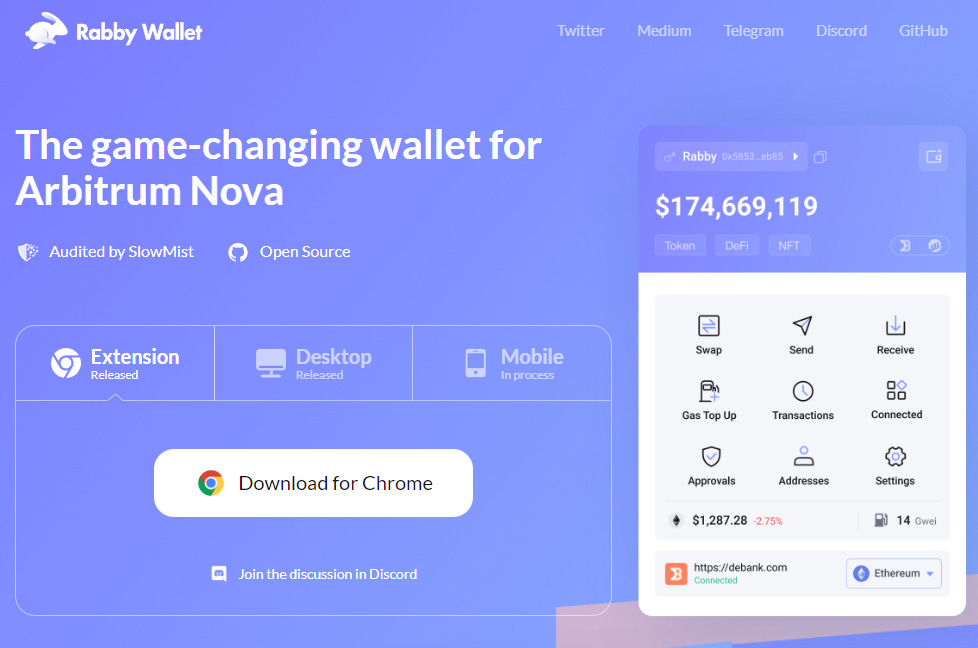
Why Rabby Wallet is Worth a Look
Okay, so check this out—Rabby Wallet aims to be more than another pretty extension. It focuses on separating accounts, showing clearer approval flows, and offering guardrails around contract interactions. On a gut level it felt like a wallet built by people who had their fingers burned in DeFi before. On a thinking level I dug into the UX: the approval manager, account isolation, and transaction preview features reduce accidental exposure. (oh, and by the way… some of those features are subtle but they matter.)
For folks who want to try Rabby Wallet, you can find the official download link here. Use that only if you’re comfortable verifying the extension’s authenticity on your end—check extension permissions, review publisher info in the store, and validate signatures when possible. Don’t just click and assume.
My experience: after installing, I set up a fresh account and moved a small test amount first. That tiny step is very very important—treat it like a fire drill. If the test transaction behaves as expected, then gradually increase exposure. My gut told me to be cautious, and that paid off when a sudden RPC pop-up tried to change network settings during a swap attempt. I canceled immediately.
Practical Security Habits That Work
Short checklist: use a strong seed phrase backup, prefer hardware signing for big moves, isolate high-value assets in a separate account, and review contract allowances regularly. Hmm… sounds obvious, but defaults matter: wallets often request unlimited allowances to reduce friction—don’t accept that without thinking. Initially I accepted unlimited approvals to speed trades, but later I discovered a drained token pool on an old account—lesson learned.
On the analytical side, track these patterns: which dApps you connect to, what permissions they ask for, and whether the wallet warns you about unusual contract code. If a wallet’s transaction preview is too vague, that’s a red flag. Something else: treat RPC endpoints like power tools—only use reputable ones, and be wary of random networks suggested by sites.
Operational tips I rely on: (1) Use a burner account for new or untrusted dApps. (2) Keep a main account with the bulk of your holdings on a hardware wallet or in cold storage. (3) Revoke allowances after use with a dedicated manager. (4) Use separate browser profiles for different risk levels, because extension isolation is imperfect and browser extensions can conflict. These are small frictions that save headaches later.
Transaction Hygiene and Approvals
Here’s what bugs me about sloppy workflows: people approve everything and assume «the system will protect me.» Nope. That’s optimism bias, and it’s costly. When a contract asks to move tokens, check the function signature, the amount, and whether the approval is «infinite.» If any of that is unclear, pause. My rule: if I can’t read a transaction quickly, I don’t sign it.
Rabby tries to help by showing more contextual transaction data and separating account types. This matters when interacting with complex DeFi protocols that bundle multiple actions into one signature. On one hand that bundling saves time, though actually—bundled transactions can hide risky calls. So I mentally break down multi-call signatures and verify each part.
Defense-in-Depth: Beyond the Extension
Don’t put all your trust in the extension alone. Use a layered approach—security isn’t a single product, it’s a set of habits and tools. Hardware wallets for large holdings, burner accounts for experiments, and continuous monitoring for suspicious approvals. Also, consider using a transaction-signer intermediary or multisig for team funds. My instinct said multisig is overkill at first, but after a near-miss with a compromised key, multisig became a no-brainer.
One more practical nudge: educate the people you interact with. If you’re part of small DAOs or collaborative projects, standardize safe patterns—how to request signatures, who checks what, and when to escalate. Social engineering is still the main trick attackers use. I once ignored an «urgent» signature request and later found out it was a targeted phishing attempt. That pause saved me… seriously.
Frequently Asked Questions
Is a browser extension wallet safe for everyday DeFi?
Short answer: mostly, if you practice strict hygiene. Use small stakes for daily use, keep large funds on hardware or in cold storage, and never approve unlimited allowances without verifying. Also separate activities across multiple accounts and profiles.
Can Rabby Wallet replace a hardware wallet?
No—hot wallets and hardware wallets serve different roles. Rabby is convenient for quick dApp interactions and for having protective UX layers; hardware wallets are still the gold standard for signing large, sensitive transactions offline. Combine them where possible.
How do I spot a malicious approval or phishing attempt?
Look for vague descriptions, unusually large allowances, unfamiliar contract addresses, and network change requests you didn’t expect. If anything looks weird, cancel, copy the contract address, and check it independently on trusted explorers. I’m not 100% sure about every edge case, but those checks cover most scams.
Alright—final thought. There’s no perfect wallet, and the ecosystem will always be a cat-and-mouse game. My approach is pragmatic: reduce exposure, add friction where it matters, and trust tools that force transparency. Something about that small friction keeps bad actors from sweeping the rug out from under you. I’ll keep testing and tweaking my setup; I’m curious and slightly paranoid, which in this space is usually a good combo. Somethin’ to sleep on…

